Emission Exclusion Zones Go City-Wide: A Wave of China Environmental Rules

In the second half of 2026, environmental policy for non-road mobile machinery has clearly accelerated. On September 3, Qilu Net reported that Linyi City will ban high-emission non-road mobile machinery across its entire administrative area from July 2027; on July 10, the Jinan municipal government issued a notice adjusting its exclusion zones for high-emission non-road mobile machinery, pushing the urban ban further outward; on August 20, the new version of the Guangdong Province Air Pollution Prevention and Control Regulations formally took effect, writing supervision of non-road machinery emissions into local legislation; and at the national level, the "China VII" standard has entered its countdown.
Three threads are tightening at the same time: local exclusion zones are expanding from "urban districts" to "the whole jurisdiction", national standards are advancing from China IV toward China VII, and the 15th Five-Year Plan carbon peaking program has written new-energy substitution into a large-scale task. For equipment owners, rental companies and overseas buyers, this is not background news — it is a direct variable in procurement and operating decisions.

1. Exclusion Zones Are Moving From Urban Districts to the Whole Jurisdiction
Exclusion zones for high-emission non-road mobile machinery are not a new concept. Shenzhen issued its notice designating such zones as early as February 2024, and cities such as Beijing, Shanghai and Guangzhou have long had access lists of their own. What truly deserves attention are two changes that emerged in 2026.
First, the definition of the zone has changed. Linyi's plan covers the "whole jurisdiction," no longer distinguishing between the main urban districts and the counties. This hits small and mid-sized owners whose bread and butter is county-level job sites and rural infrastructure hardest — China II and China III equipment that could previously keep working normally outside the exclusion zones now has only two options once the ban goes city-wide: retire it or sell it.
Second, the scope of oversight is extending. On March 26, 2026, Shenzhen issued a notice restricting the passage of diesel trucks meeting China III and China IV emission standards, stretching regulation from "machinery on the job site" to "transport on the road." This means a compliant excavator can still be blocked when relocating if the truck that carries it is not compliant. After the new Guangdong Province Air Pollution Prevention and Control Regulations took effect in August, local legislation of this kind will keep ratcheting up.
In terms of timing, exclusion-zone policy follows a steady pattern: there is usually a buffer of 6 to 18 months between the issuance of a notice and its formal enforcement. Linyi issued its notice in September 2026 and enforces it in July 2027 — a buffer of roughly 10 months. In other words, owners still running China II and China III equipment have less than a year left to make up their minds.
2. The China VII Countdown: Closer Than You Think
The emission upgrade path for non-road mobile machinery has so far reached China IV. Since December 1, 2022, all non-road mobile machinery produced, imported or sold must be fitted with engines meeting China IV standards; that switchover absorbed a large volume of existing China III equipment across 2023 and 2024 and kicked off the first wave of replacements.
The next round has already started. In March 2025, People's Daily reported that China would study and draft a "China VII" standard; by March 2026, several industry outlets reading the signals released by the Ministry of Ecology and Environment judged that China VII had entered its countdown. Judging by the pace of earlier transitions — from China V to China VI, and from China VI to China IV — China VII is unlikely to cover the full power range in one leap; it will more likely take a phased path of "key cities first, high-power segments first, newly added machinery first."
There are two direct consequences for the industry.
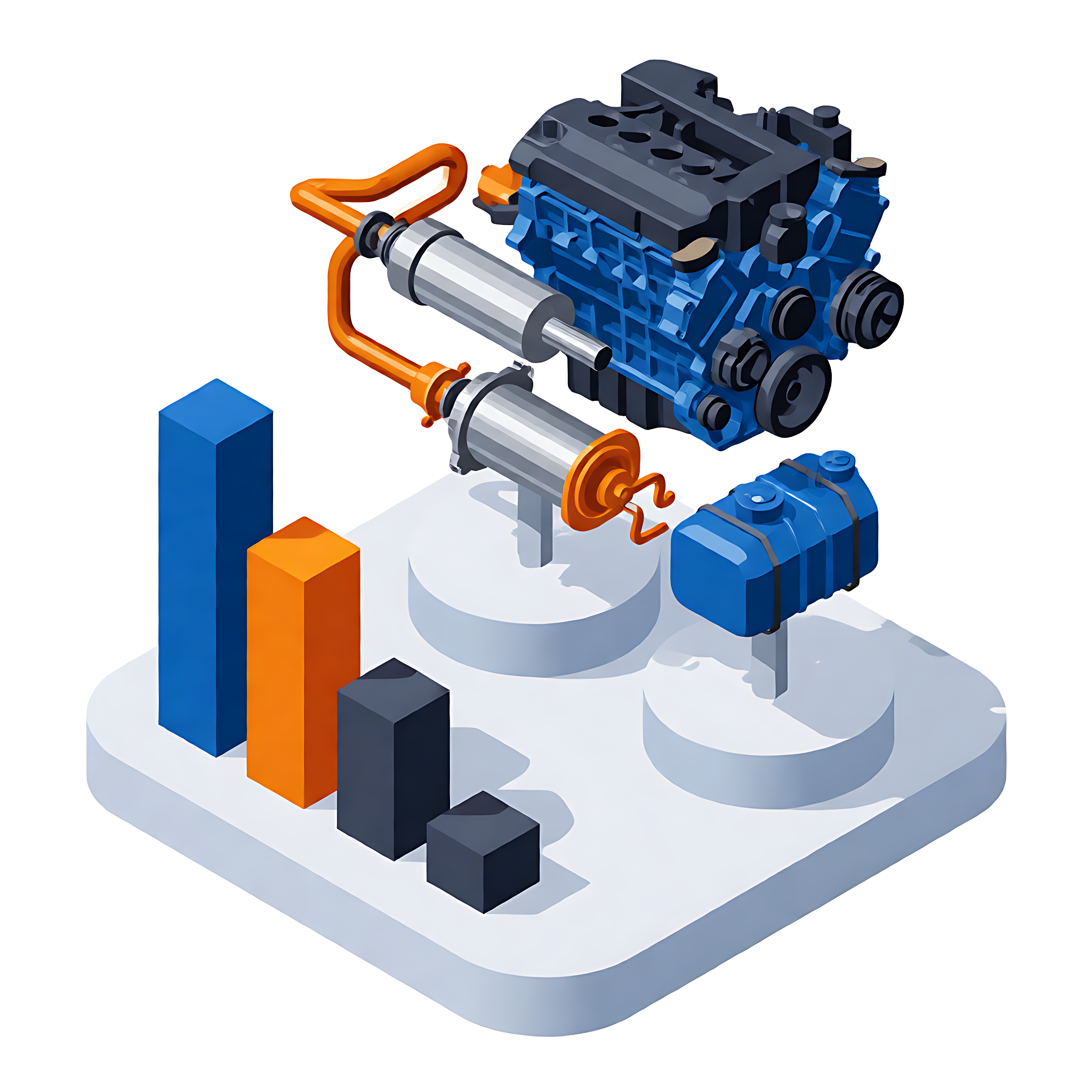
- After-treatment systems will go through another round of iteration. The configuration and calibration of particulate filters, catalytic injection and urea injection systems will all have to be redone, and the OEMs' R&D spend will eventually show up in the selling price.
- The valuation logic for used equipment will be rebuilt. Equipment below China IV will see its liquidity drop as exclusion zones expand, and a downward revision of residual values is all but certain; conversely, power platforms that satisfy China IV and hold upgrade potential for China VII will hold their value better.
We flagged both points in our earlier analysis of electric loader penetration; the current policy timetable is now bringing them to fruition faster.
3. The 15th Five-Year Plan Carbon Peaking Program: New Energy Moves From Demonstration to Mandate
On July 10, 2026, the State Council issued the 15th Five-Year Plan Carbon Peaking Action Plan, explicitly calling for large-scale adoption of new-energy heavy-duty trucks. This upgrades new-energy substitution from "encouraged pilots" to a "quantified task."
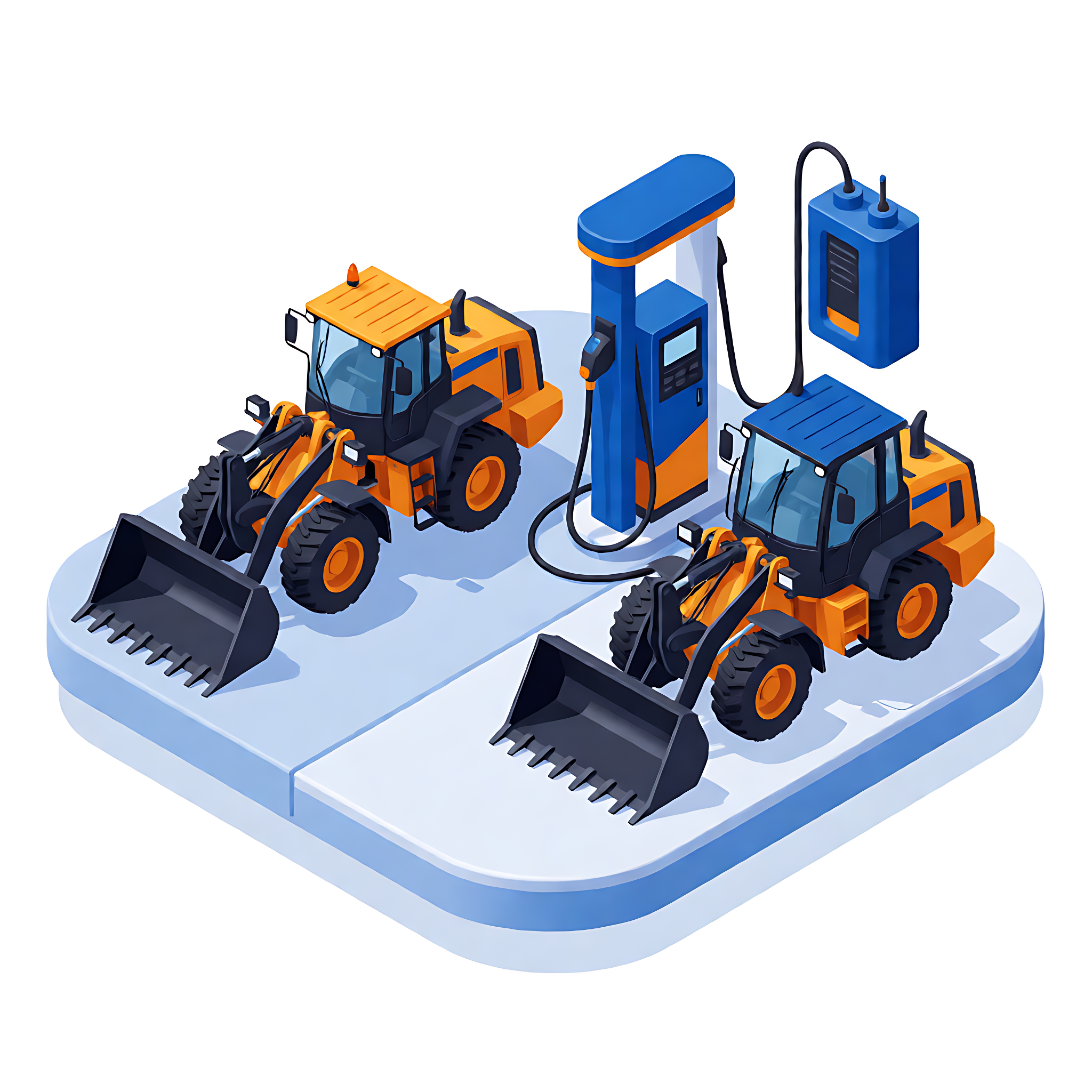
The policy signal already has matching data at the market end. In August 2026, domestic sales of electric loaders reached 3,532 units, up 42.59% year on year, for a penetration rate of 31.55%; from January to September, cumulative domestic sales of electric loaders totaled 33,865 units, close to 60% of total domestic loader sales. In the loader category, electrification has already crossed the early-adopter stage and moved into mainstream procurement calculations.
And the expansion of exclusion zones is precisely the most practical driver of electrification. In fixed-duty urban scenarios — earthworks, municipal works, ports — electric equipment is inherently compliant on noise and emissions and needs no extra access application. Tightening policy and product maturity have collided in 2026 — a window that has not appeared in the past five years.
For overseas buyers, this combination matters just as much. The EU's zero-emission roadmap for non-road machinery keeps tightening, and in June 2026 the ICCT held a dedicated non-road electrification summit themed on construction machinery; yet in that same year, in July, the US EPA put forward a proposal to amend its heavy-duty engine rules and scrap the DEF torque-reduction limit — regulatory directions are diverging. China's electric equipment capacity happens to sit right in the middle ground between these two tracks.
4. International Regulation Is Diverging, and Export Compliance Costs Are Rising
Look at the globe as a whole and 2026's emission regulation is not a one-way tightening but three different paths.
- United States: In July 2026, the EPA proposed amending its heavy-duty engine compliance rules, planning to scrap the DEF (diesel exhaust fluid) torque-reduction penalty; AEM also published a piece in April reminding non-road equipment manufacturers that the pace of rule changes is accelerating.
- California: CARB's Tier 5 non-road emission rules continue to advance; in June 2026, SwRI demonstrated a technical pathway for diesel non-road engines to meet Tier 5.
- European Union: The zero-emission roadmap holds to its original pace, and urban access restrictions keep multiplying.
For Chinese companies in the export business, this means the "one certification works everywhere" model no longer holds. The same electric loader entering Europe, North America and the Middle East faces entirely different certification frameworks; meanwhile, the access window for fuel-powered equipment in the EU is narrowing. As we argued in the deep-water export piece, systematic capability is what decides the game — and compliance is the most expensive block of it.
5. Four Things Owners and Buyers Should Do Now
1. Take stock of your equipment list. Lay out the emission tier, engine power and main operating area for every machine, and flag the units that will fall inside an exclusion zone over the next 12 months. Deal with China II and China III equipment first — don't wait until the ban is about to take effect to dump it all at once.
2. Watch the relocation chain, not the single machine. Emission oversight has already reached from the job site into transport. When purchasing, assess the supporting transport capability together with the equipment, so that a compliant machine does not get stuck when it needs to move.
3. Run the electric math first for fixed-duty scenarios. Municipal works, ports and fixed stockyards — anywhere with a stable power supply — are scenarios where the total cost of ownership of electric equipment usually breaks even over a three-year cycle; where the work is scattered and mobile, diesel is still the steadier choice.
4. Leave room for policy variables in export orders. Certification and access rules in your key markets are still being adjusted, and quotations should carry explicit cost lines for emission certification and localization modifications rather than writing them off as unforeseeable expenses.
Policy has never been a backdrop — in the 2026 construction machinery market it is the most certain demand curve there is. Every time an exclusion zone expands, a batch of equipment is forced out; every step China VII comes closer, a round of renewal is pulled forward. That also explains why excavator sales in September kept growing on both the domestic and export fronts at once — policy-driven replacement demand is stacking into the same time window as overseas mining and infrastructure demand.
EquipNode has long provided equipment selection, emission compliance consulting and procurement services for overseas buyers and domestic machine owners. If you are evaluating excavators, loaders or concrete machinery that meet China IV or higher emission standards, or need an emission compliance plan for a specific market, welcome to contact us for quotations and technical materials. For the latest models and prices on SANY pump trucks and electric loaders, inquiries are welcome directly.
Related reading:
- [Electric loader penetration and half-year report data](../en/blog-news-20261008.html)
- [Construction machinery into the deep water of overseas markets: localization is the decisive factor](../en/blog-news-20261007.html)
- [The excavator export map: who is buying in Latin America, Africa and the Middle East](../en/blog-news-20261014.html)