A Norwegian Blogger Ordered 70 Units: How China 2000-Dollar Mini Excavators Conquered Europe
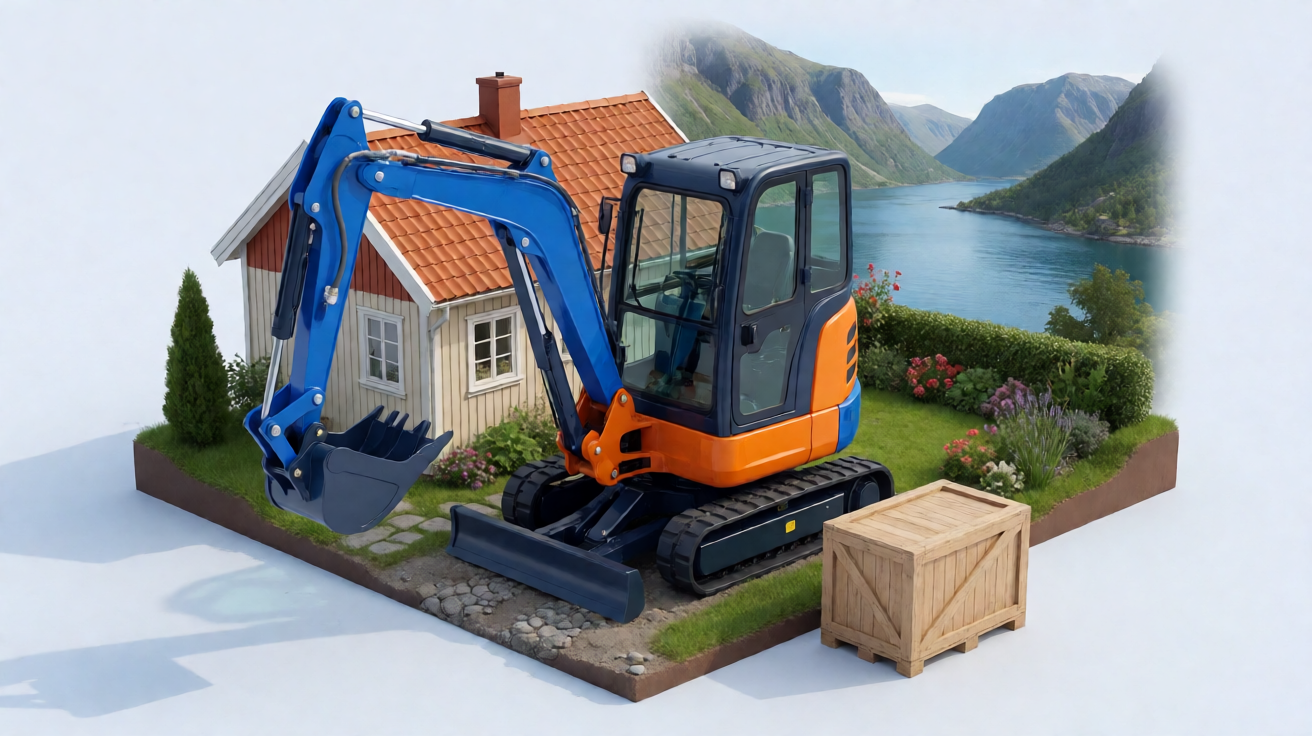
How a 1.2-Tonne Machine Broke Into Norwegians' Yards
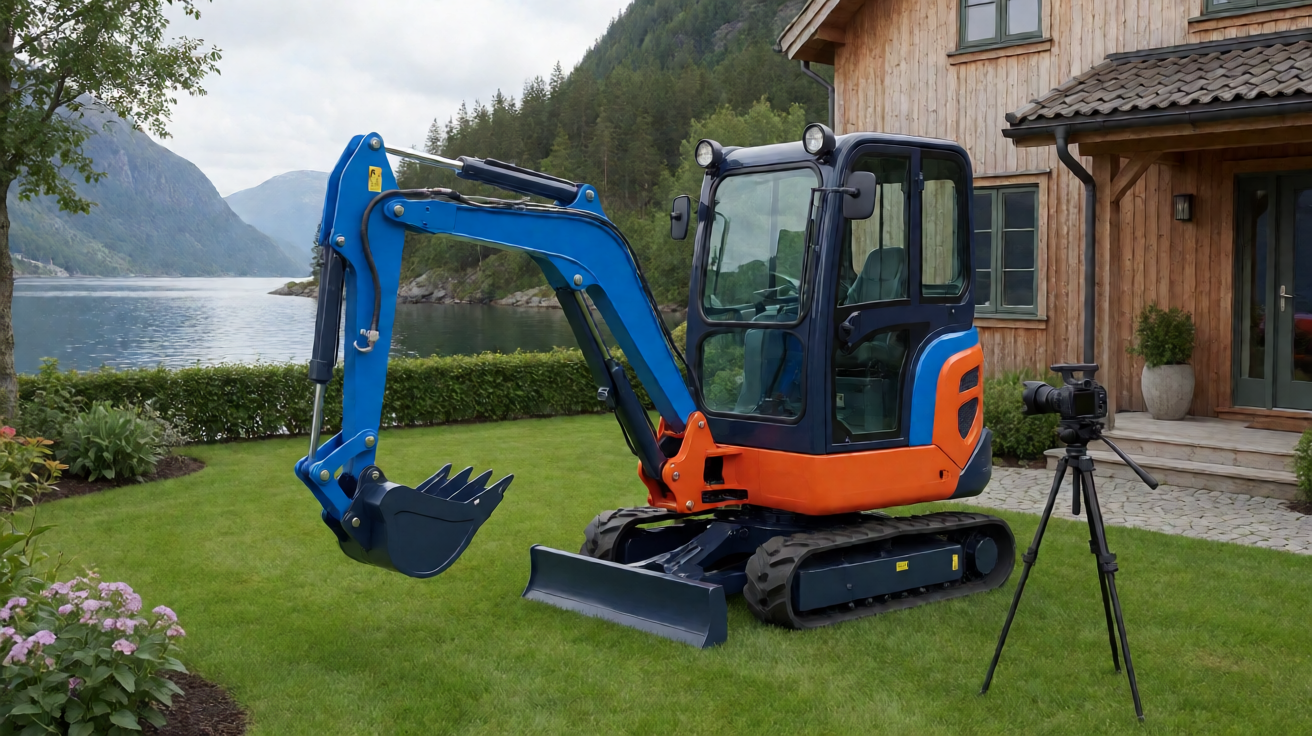
Norwegian video blogger Ove Frøngen still remembers the afternoon of that "impulse purchase."
In Norway, a mini excavator has always been expensive. He stumbled online on a piece of equipment from China: 1.2 tonnes of operating weight, priced at under $2,000. His first reaction to the quote was "fake" — by European market standards, a complete set of equipment of the same specification sells for $6,000 to $8,000, and a price gap of three times on a single machine simply didn't look plausible.
He placed the order anyway. When the equipment arrived, he turned the review process into a video, and views quickly passed into the millions. More dramatic was what came next: after the video went viral, Frøngen ordered roughly 70 units directly from the Chinese manufacturer, going from a review blogger to an importer.
This is not an isolated case. Over the past two years, the same plot has played out repeatedly on social media across Europe, North America, and Southeast Asia — Chinese mini excavators are shifting from "engineering equipment" to "household tools," and the speed of that shift has caught most industry players off guard.
Data: Mini Excavators Have Become the Fastest-Growing Export Segment
Start with some hard numbers.
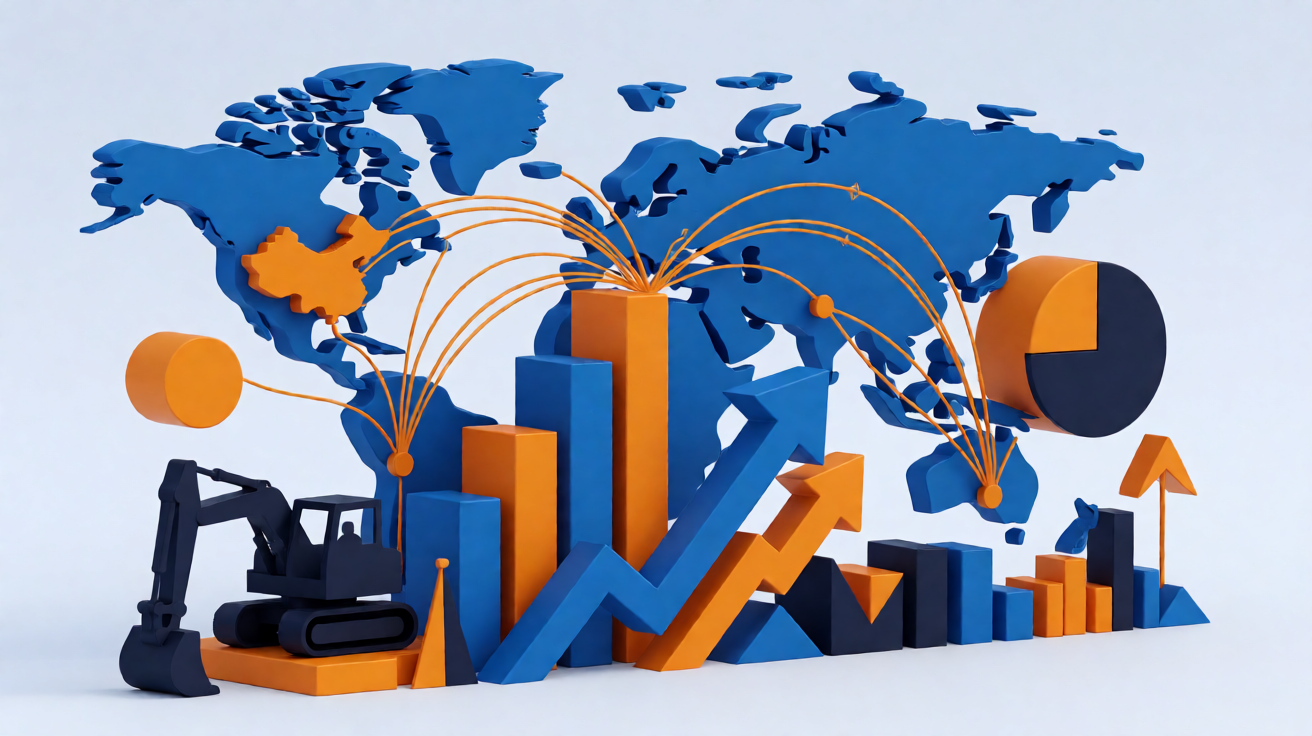
According to statistics from the China Construction Machinery Association, in the first half of 2026, China's construction machinery exports reached $34.373 billion, up 21.7% year on year; of that, exports to the EU reached $3.626 billion, up 28.9% year on year, with the EU clearly outpacing the overall growth rate.
By unit volume, the country exported more than 85,000 excavators in the first seven months of the year, a year-on-year increase of more than 31%. And over the five years from 2020 to 2025, the industry's export scale nearly tripled.
Even more notable is the structural change. Sales of compact construction machinery in China are expected to exceed 180,000 units in 2026, with mini excavators taking more than 60% of the share to become the absolute mainstay, and sales expected to top 110,000 units. Small excavators — especially household models in the 2-tonne class and below — have already become one of the fastest-growing segments in Chinese construction machinery exports over the past two years.
The numbers on the company side tell the same story. Shandong Huayi Heavy Industry Group booked more than 17,000 units in orders in the first half of this year, with over 75% coming from overseas.
How the Math Works Out: Labor Is Expensive in Europe, and a Mini Excavator Pays for Itself in Two or Three Jobs
The popularity of mini excavators overseas cannot be explained by the word "cheap" alone — behind it is a very clear economic calculation.
Leng Shasha, marketing director at Shandong Huayi Heavy Industry, ran the numbers: "Labor in Europe is expensive — hiring a professional crew for a day of work often runs into hundreds of euros. Buy a one-tonne mini excavator and it pays for itself in two or three jobs; everything after that is money saved. That is the most fundamental purchase logic."
This logic makes the buyer profile for mini excavators completely different from that of medium and large excavators. Buyers of 20-tonne-plus machines are mines and infrastructure project departments, and the process runs through bidding, bulk purchasing, and financial leasing. Buyers of one-tonne mini excavators are household users, small farm owners, and individual repair contractors — the decision chain is extremely short: see a video, compare prices, place the order, all within a week.
The barrier to use is falling at the same time. Unlike medium and large excavators, which require professional operating qualifications, mini excavators need very little training — "you can use it as soon as you buy it." Add the expandability of the attachment system, and one mini excavator fitted with different attachments can do completely different jobs, which fits almost seamlessly into the mature yard culture and gardening consumption habits of Europe and North America. To find out just how many kinds of work one excavator can do, take a look at our earlier piece Excavator Attachments 101: How One Machine Does Ten Jobs.
Worth noting is that the heat is also spilling over into adjacent categories. Europe used to be very strong in lawn mowers and garden machinery, but Chinese manufacturing is now overtaking it by leapfrogging on two factors — "electric" and "miniature." Europe has a mature gardening culture, and consumers there are willing to spend money on this kind of mini garden equipment.
How a One-Third Price Tag Is Made
When the price gap is this large, where exactly does the money come out?
The comparison offered by Shandong Haituo Machinery is direct: a complete set of equivalent equipment in Europe sells for $6,000 to $8,000, and spare parts can cost 3 to 5 times their domestic equivalents; while a complete domestic set of comparable performance exported overseas costs only $2,000 to $2,800, roughly one third of overseas brands. In the US market, Caterpillar also produces mini excavators, and its craftsmanship is indeed somewhat better, but it sells at three times the price of domestic brands.
The source of the price difference is not "cutting corners," but three things stacked together:
- A complete industrial cluster. Places like Jining in Shandong and Changzhou have already formed scaled-up excavator industry chains, with an extremely short supply radius from structural components and hydraulic parts to attachments, so small and medium manufacturers can organize production without building a full supply chain of their own.
- A change in channel models. Cross-border e-commerce and livestream commerce on Alibaba International Station let small and medium enterprises "borrow a boat to go overseas," bypassing the traditional distributor system and reaching end users directly — Frøngen placed his order directly online.
- Flexible small-batch production. Household demand is highly fragmented, with endless combinations of colors, attachments, and configurations, and the scaled production lines of big manufacturers fit this less well than the flexible lines of smaller makers.
Together, these three things are what make "buying a working excavator for $2,000" commercially viable.
The Liugong Changzhou Case: The Playbook Behind a 98% Export Rate
If small and medium manufacturers rely on cost-performance and channels, then the leading players answer with a different playbook.
The small excavator production line at Liugong Changzhou Machinery Co., Ltd. rolls off a complete machine about every 7 minutes, reaching a daily output of 90 units per shift, with half of its products exported to Latin America, North America, Southeast Asia, and elsewhere. Two of its small construction machinery models have become "star products" in overseas markets, with an export rate as high as 98%, 80% of them going to markets such as Argentina, India, and Australia. Driven by policy and accelerated electrification, the company's excavator export volume grew 166.67% year on year.
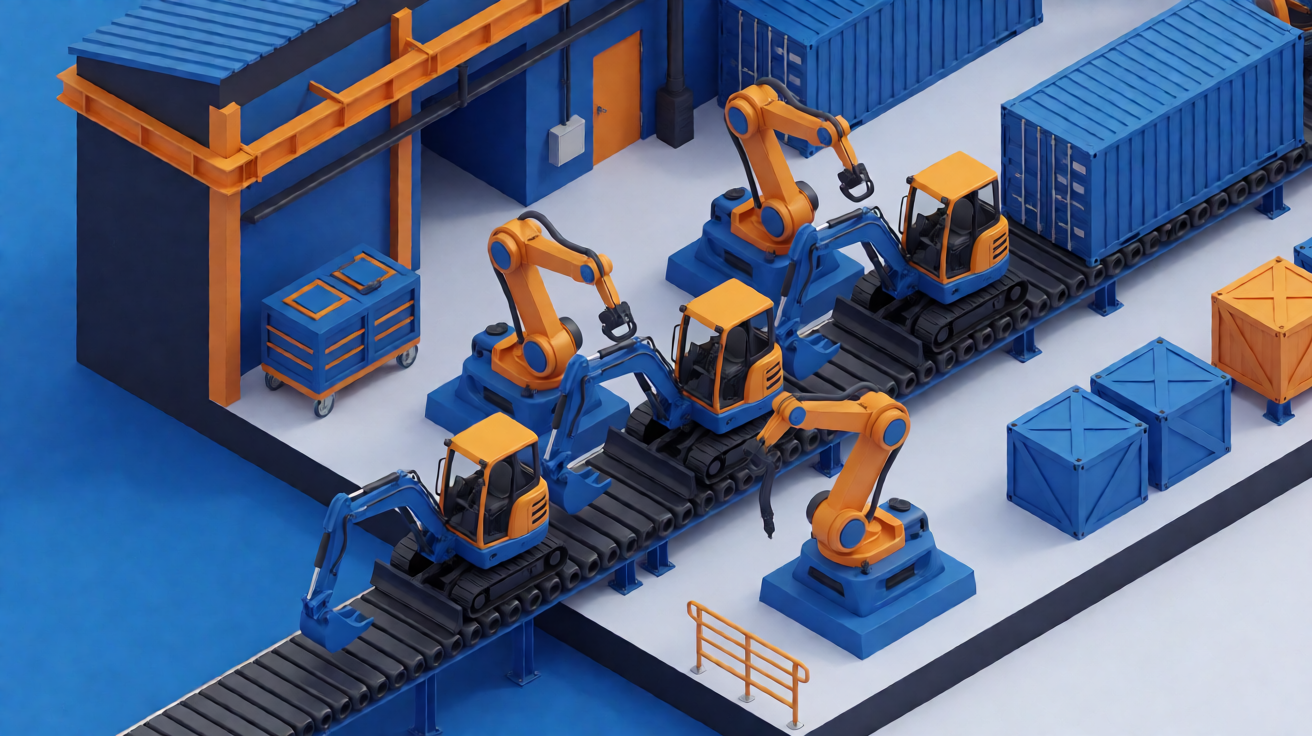
What supports this export rate is a three-layer layout:
- Technology localization: improving comfort and automation for overseas working conditions, and using drone-based remote control technology to enable safe operation in high-risk environments, upgrading "usable" into "easy to use and safe."
- Organizational localization: setting up subsidiaries in Indonesia, Thailand, and elsewhere to advance local operations, with service and spare parts landing alongside the complete machines.
- Rules localization: taking advantage of China's preferential tariff policies with ASEAN member states to claim certificates of origin. In the first eight months of this year, Liugong claimed a cumulative 334 certificates of origin issued by Changzhou Customs, covering a declared value of more than 460 million yuan, directly driving down export costs.
Regional data corroborates the effectiveness of this playbook. According to Changzhou Customs, in the first eight months of this year, Changzhou's imports and exports with Latin America, Africa, and India reached 22.69 billion yuan, 11.11 billion yuan, and 11.06 billion yuan respectively, growing 11%, 22.9%, and 20.1% respectively. These emerging markets are exactly where the incremental growth of mini excavators and small construction machinery is most concentrated. For a fuller picture of the country-by-country distribution, see The Excavator Export Map: Who Is Buying in Latin America, Africa, and the Middle East.
One caveat is worth raising: high export growth does not equal high profit. Exchange rate fluctuations, ocean freight costs, and tariff policy can all eat directly into margins — this is exactly the phenomenon we keep seeing in our Comparison of the Big Three's Half-Year Reports: overseas revenue share breaks 60%, yet exchange losses hit a record high at the same time. The economics of going global have to be calculated on both sides.
From "Big-Project Driven" to "Dual-Driven": How the Structure of Going Global Is Changing
Step back one level, and the rise of the mini excavator actually marks a structural shift in the logic of Chinese machinery exports.
Liu Chunsheng, associate professor at Central University of Finance and Economics, argues that the popularity of small machinery overseas represents a shift in Chinese machinery exports from being "big-project driven" to "big projects + civilian niche markets dual-driven" — the trade subjects expanding from large leading firms to export-oriented small and medium enterprises, and market demand extending from engineering procurement to fragmented end scenarios such as household yards, small farms, and individual repair work, forming a new model in which "mature domestic products go overseas, then iterate and optimize in reverse."
This change has three practical consequences:
Stronger cycle resistance. Large infrastructure orders are heavily affected by the fiscal cycles of various countries and swing sharply; while purchasing decisions by households and micro-businesses are spread across the whole year, with small amounts per order and high frequency, so overall volatility is much milder.
New room for small and medium enterprises. Relying on complete industrial clusters to enter overseas niche tracks, and reaching end users directly through cross-border social media, without having to fight leading firms for the same pool of large customers.
Greater export resilience. A richer range of export categories and a more diversified foreign trade market reduce dependence on large infrastructure orders.
For buyers, this also means one thing: in the past, if you wanted to buy Chinese construction machinery, you could only go through the overseas agents of a handful of large manufacturers; now, from a 1.2-tonne household mini excavator to large mining equipment, the range of choices and the room for negotiation are entirely different. To understand this change systematically, read Construction Machinery in the Deep Water of Going Global: Localization as the Deciding Factor.
Entering the Market Now: What Buyers Should Watch For
If you are considering purchasing domestic mini excavators for export or for your own use, here are a few practical suggestions:
- Confirm compliance first. The EU market has mandatory requirements for CE certification and emission standards (Stage V); before exporting, be sure to verify the target country's access list to avoid discovering non-compliance only after the goods reach port.
- Calculate total cost, not just unit price. Beyond the equipment price gap, spare parts prices, after-sales response speed, and spare parts inventory are the major parts of long-term costs — European parts cost 3 to 5 times their domestic equivalents, which means picking the wrong brand can push total cost of ownership far beyond the savings on the initial purchase.
- Attachments determine what the machine can do. The same base machine fitted with a breaker, an auger, a grapple, or a bucket does completely different work. Think through your main working conditions before buying — that matters more than agonizing over the brand.
- Watch exchange rates and tariff clauses. Exchange rates in emerging markets are volatile, and locking in an exchange rate clause in the contract and confirming whether a certificate of origin qualifies for a preferential tariff rate is often worth more than shaving a few percentage points off the price.
EquipNode focuses on global construction machinery procurement services, covering all categories of equipment including new and used excavators, loaders, and pump trucks, and supports multilingual inquiries and export compliance consulting. For specific quotes and configuration solutions for mini excavators and small excavators, please feel free to contact our sales team, and we will provide targeted advice based on your target market.