$600M Raised: Autonomous Excavators Are Already Doing Paid Work

On October 26, Silicon Valley startup Bedrock Robotics announced the close of a $600 million Series C round, valuing the company at $4.1 billion post-money. Unlike most robotics companies still stuck at the demo stage, that money corresponds to a fleet of fully driverless excavators digging on real commercial job sites in the United States — and already billing for the work. Autonomous construction machinery has genuinely started "clocking in."
Fully Autonomous Excavators Are Already on the Payroll
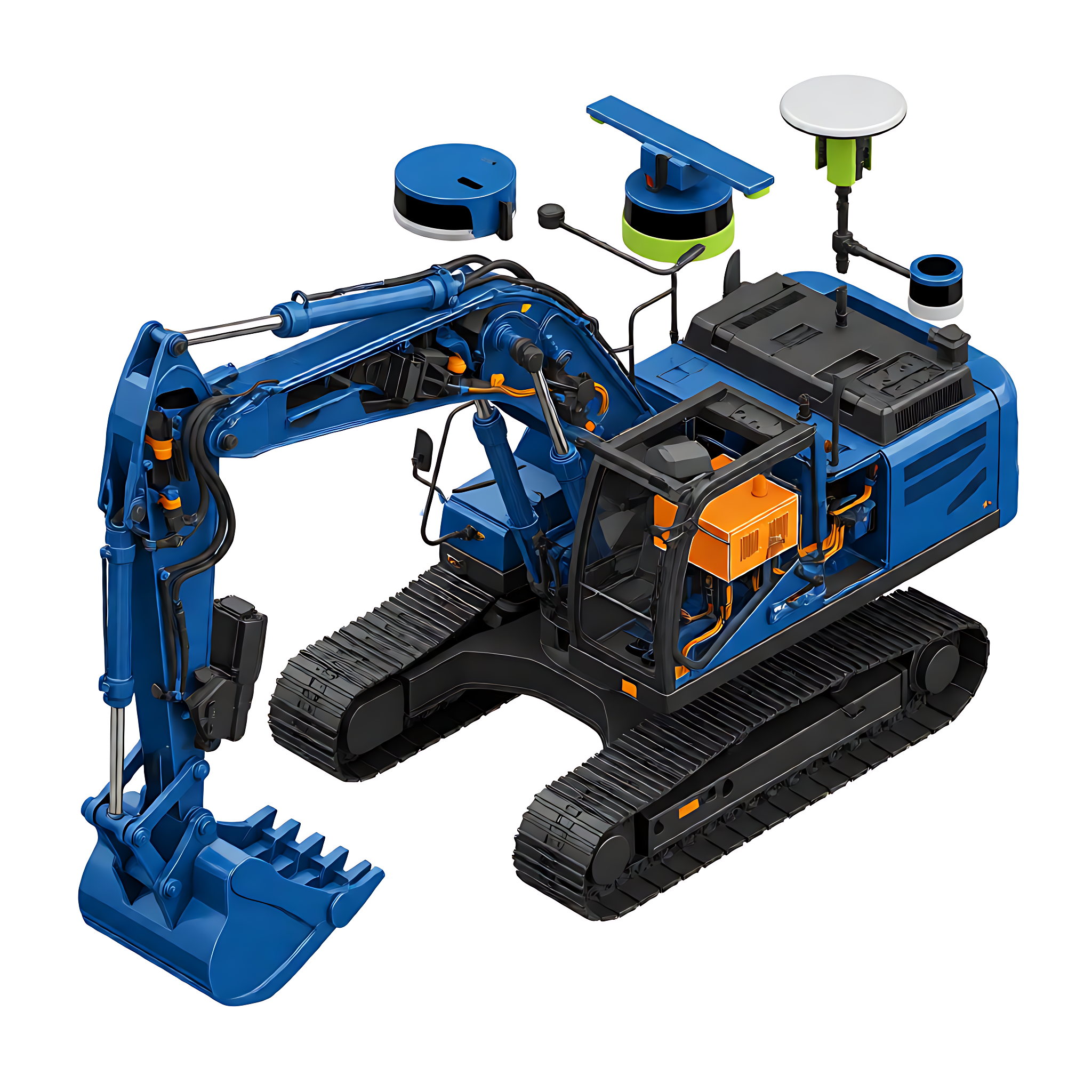
Bedrock Robotics' core team comes out of Waymo's autonomous driving program. What the company built for excavators is not a simple "remote-control retrofit" but a complete drive-by-wire kit: LiDAR, millimeter-wave radar, high-precision positioning, plus a self-developed physical AI decision-making system that lets the machine carry out earthmoving work with no human intervention.
The real milestone came in mid-August 2026, when Bedrock's fully autonomous excavators executed their first batch of paid jobs on US commercial sites — not a demo, not a test, but genuine, invoiced engineering orders. In CEO Boris Sofman's words: "We have proven that a fully autonomous excavator can perform work of real value alongside existing workers and workflows."
As of this round, the company's machines are deployed on job sites across multiple US states. The latest customer is Haydon, one of the largest general contractors in the Southwest; the employee-owned firm will deploy fully autonomous earthmoving operations at remote sites in Texas, with plans to expand into trenching work and larger machine classes. Regional leaders Wagner (Minnesota), Smith Trucking (Florida), and C.W. Matthews (Georgia) have also come on board. Since 2025, the company's installed customer fleet has more than doubled.
Where the $600M Goes: Putting Machines Into the Field
The round was co-led by CapitalG (Alphabet's venture arm) and Emergence Capital, with new investors including the U.S. Innovation Technology Fund, Bessemer, and Singapore's Temasek; existing backers include NVIDIA, 8VC, and Eclipse — bringing cumulative funding close to $1 billion.
The money goes to three main areas: first, retrofitting more machines with the autonomy kit and putting them to work on job sites; second, building out field operations teams — every autonomous excavator needs resident engineers who understand both mechanics and AI; and third, clearing construction qualifications and insurance solutions state by state. CapitalG partner Derek Zanutto put it bluntly: "From leaving stealth mode to operating autonomously on real commercial job sites, they took just one year."
The Real Driver Isn't Technology — It's the Labor Shortage
US Labor Department data indicates that by 2035, roughly 1.7 million skilled-trades positions nationwide will need to be filled each year; 87% of construction firms report being unable to hire enough entry-level tradespeople, and 88% say these roles are "harder to fill than a year ago." Emergence Capital partner Jake Saper's framing is even more striking: more than 20% of global GDP runs on industries that "can't find enough skilled workers," and construction is the most typical example.
For contractors, an excavator that can work continuously — undisturbed by worker shortages or safety risks — is an unambiguously attractive proposition. That is the core logic behind the autonomous excavator business model: not replacing people, but filling in where there is nobody left to replace.
The Chinese Benchmark: 300 Autonomous Mining Trucks Under Contract
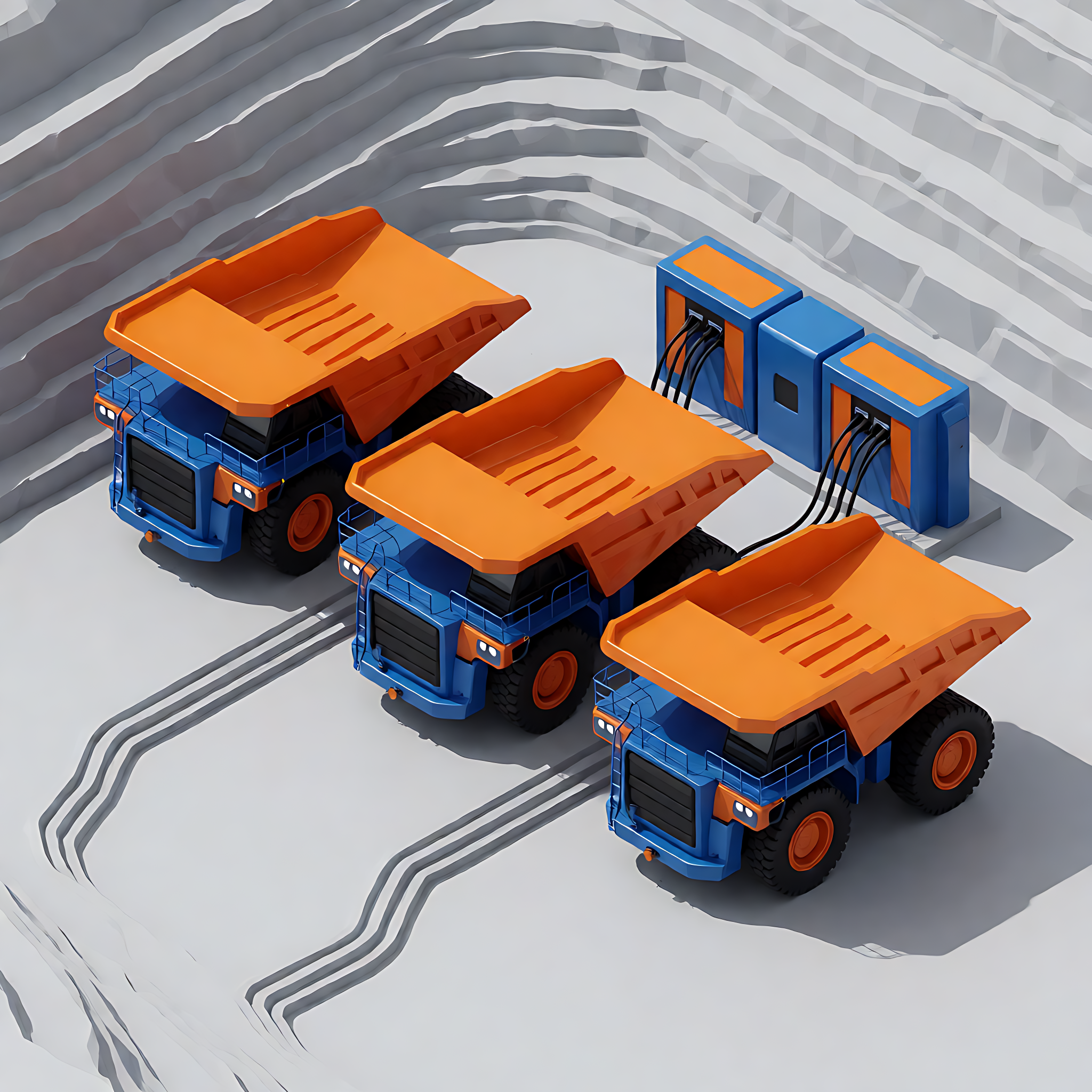
Turning back to China. On October 15, Great Wall Heavy Industries and Eacon (Yikong Zhijia) signed a strategic cooperation agreement in Jining, Shandong, covering 300 new-energy intelligent mining trucks: Great Wall Heavy Industries supplies the vehicle platform, Eacon supplies its "Zhushan" autonomous driving system, and the two deliver an integrated hardware-plus-software package.
Eacon is the clearest sample in this track: it listed on the Hong Kong Stock Exchange in July 2026, becoming the world's first pure play on mine-area autonomous driving; as of the end of June, it had more than 3,100 autonomous mining trucks in operation across 38 mines, with a domestic market share above 53%; its "Zhushan" system has been adapted to more than 70 vehicle models, with customers including China Energy Investment Group, Zijin Mining, and Baowu Group. On the vehicle side, Great Wall Heavy Industries' GT105E battery-electric wide-body truck carries a rated payload of 70 tonnes, recovers more than 90% of energy on heavy-load downhill runs, and cut full-year comprehensive operating cost by roughly 94% versus a diesel counterpart in field tests at a stone quarry in Guangxi.
At the industry level, China's autonomous mining truck sales penetration was about 12% in 2025, and institutions expect that figure to rise above 50% by 2030. Mine-area autonomous driving is moving from demonstration and validation into scale procurement.
Japanese and Korean Players Are Betting Too
The drive toward autonomy goes beyond China and the US. In June this year, Develon's (formerly Doosan) Real-X autonomous excavator went into service in Switzerland, becoming the first excavator anywhere to work continuously in a real engineering setting; in September, Hitachi Construction Machinery launched a "physical AI" R&D program, teaching hydraulic excavators to operate autonomously by learning the skills of experienced operators, and joined Toyota's Woven City mobility test-city project as an innovator; Caterpillar, for its part, entered an automation partnership with AI company FieldAI. For a sense of the overall cadence of new electric and autonomous releases, see our October new-product roundup.
What Commercialization Still Needs
For all the buzz, there is a cooler view to take. Take Eacon: it posted a net loss of 189 million yuan in the first half of 2026 — and even though gross margin has climbed from 1.7% to 18.9%, the scale effect has not yet fully arrived. The real threshold for autonomous solutions is not the algorithm but whether delivery timelines hold steady, whether real-world mine-site utilization can match human-piloted levels, how maintenance liability is divided, and, most critically, the long-term accumulation of insurance and safety records.
Bedrock, likewise, faces real problems in the US: high resident-operations costs and large regulatory differences across states. On the question of electrification and autonomy often being two sides of the same machine, we already broke down the drivetrain-level reconfiguration logic in why electric loaders dropped the torque converter.
Closing Thoughts
A $600 million round, a 300-truck order, a penetration expectation rising from 12% to 50% — in 2026, autonomous construction machinery has cleared the "can it work at all" threshold and is now answering "is it worth it." For contractors and equipment buyers, the question to judge is no longer whether to pay attention to this trend, but which machine class and which job scenario to deploy first.
EquipNode continues to track the electrification and intelligence of construction machinery worldwide. To learn more about quotes on new machines or autonomous deployment solutions, contact our sales team for tailored recommendations.