Crawler vs Wheeled Excavator: 3 Factors to Choose the Right One
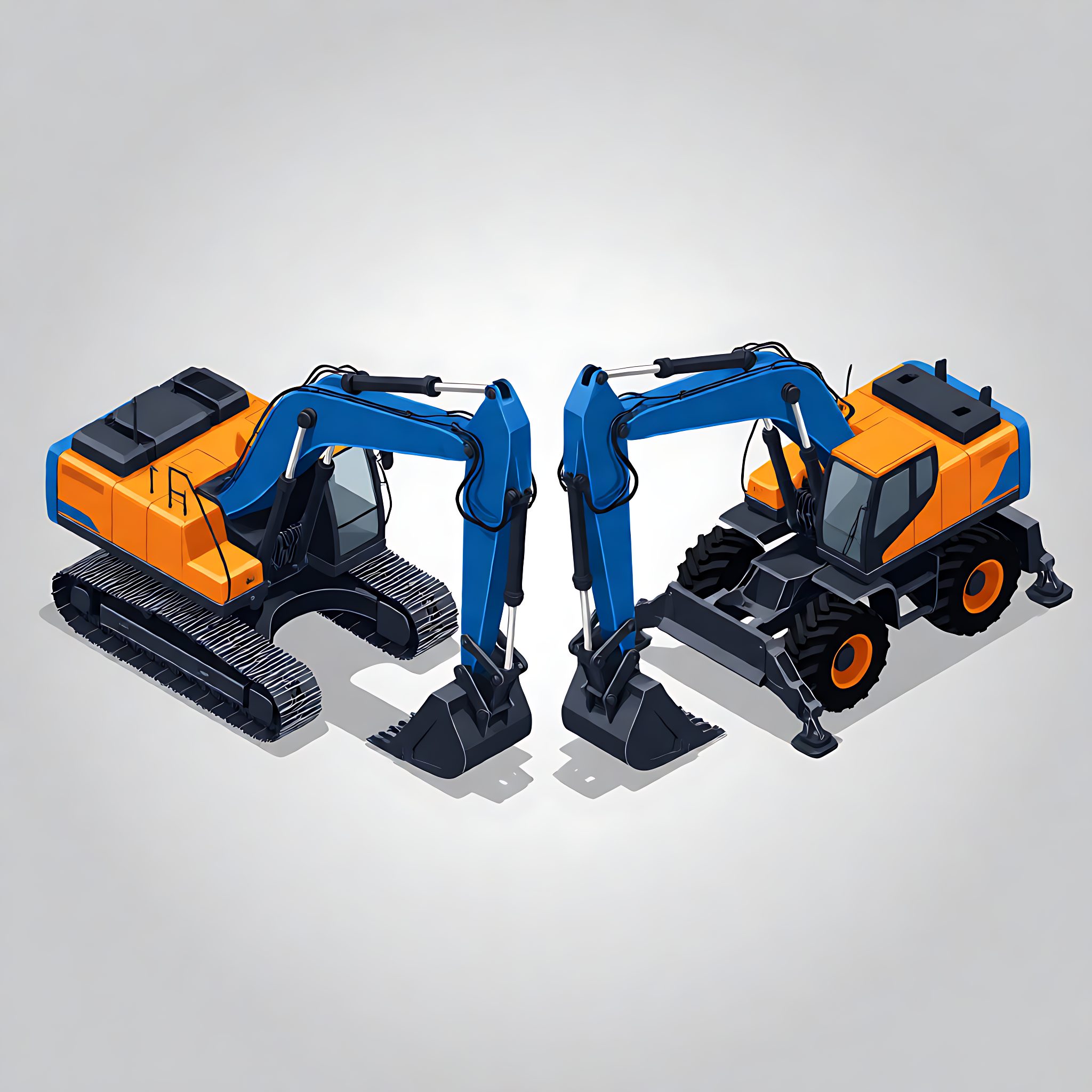
The most common mistake new owners make when buying an excavator is looking only at tonnage and price while ignoring the undercarriage type. Crawler and wheeled excavators may both dig, but in practice they are completely different machines — choose wrong and the machine can't move around the site, can't be relocated, and the costs never come back.
This article breaks the two apart piece by piece and explains the differences across three dimensions — mode of travel, working scenarios, and cost of ownership — so you can get the choice right the first time.
1. Undercarriage Structure: One Runs on Tracks, the Other on Tires
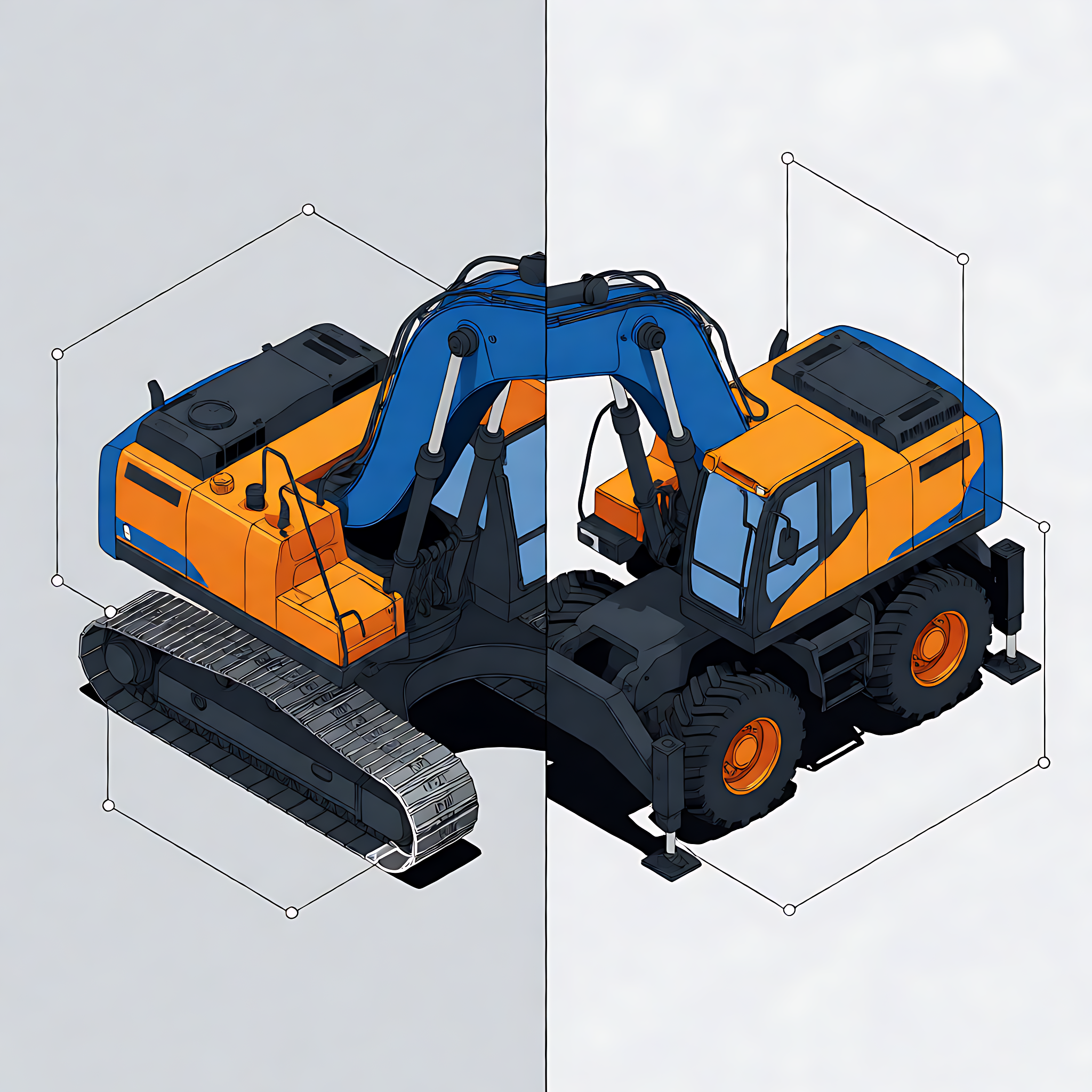
A crawler excavator (Crawler Excavator) carries steel tracks on its undercarriage and moves on the friction between the track shoes and the ground. A wheeled excavator (Wheeled Excavator) rides on rubber tires and usually also has a hydraulic outrigger used to pin the machine in place while working.
This fundamental difference determines their three core characteristics:
- Ground pressure: The crawler's large contact area keeps ground pressure as low as 0.03-0.05 MPa, so it can work normally in marshes and soft ground; a wheeled machine's ground pressure is much higher, and it sinks easily in bad terrain.
- Mobility: Wheeled excavators can reach 30-40 km/h and can drive themselves between sites on public roads; crawler transport always depends on a flatbed trailer, so every relocation has to be budgeted as a separate haulage cost.
- Road damage: Steel track shoes crush asphalt and concrete surfaces, while rubber tires are road-friendly and suit urban sites and already-paved ground.
In short, the crawler is built for "heavy loads, complex terrain, and long-duration stationary work"; the wheeled machine is built for "frequent relocation, road mobility, and urban work."
2. Working Scenarios: What Each One Is Best At
Where the crawler excavator shines:
- Earthworks, foundation pit excavation, river dredging, mining and other high-volume jobs
- Field conditions where the ground is soft, muddy or sloped
- Scenarios that need long stretches of continuous stationary work, such as municipal pipe networks and building foundations
Crawlers grip hard and stay stable, and they hold up better under heavy-duty work when fitted with breakers, log grabs, hydraulic shears and other attachments. This is also why crawlers account for more than 90% of China's excavator fleet. On the demand side, our September operating hours turn positive: domestic inflection signal also confirms that earthmoving crawler equipment utilization is rebounding.
Where the wheeled excavator shines:
- Municipal road repair, emergency pipeline fixes, landscaping and other short-duration jobs that require frequent moves
- Paved factory yards, ports and logistics parks where the surface must not be damaged
- Scattered jobs that need fast round trips between several sites in a single day
The wheeled advantage is "drives fast, stops fast." When an emergency municipal repair comes up, it drives itself over and starts work, then drives away when it is done — no waiting for a trailer. For container handling at ports and loading in warehouse yards, a wheeled machine fitted with a rotating grab works very efficiently.
In one sentence: choose tracks for big earthwork and rough field roads; choose wheels for urban odd jobs, frequent relocation, and paved sites.
3. Cost of Ownership: Affordable to Buy, But Can You Afford to Keep It?
Many buyers only compare the sticker price of the whole machine, when in fact the running costs diverge even more. We split it into three parts:
Purchase cost: In the same tonnage class, a wheeled excavator typically costs 10%-20% more than a crawler, because it adds a wheeled undercarriage, a transmission and a steering system, making the structure more complex.
Fuel and tires: Wheeled machines burn less fuel traveling on hard surfaces, but tires are consumables — an industrial tire is expensive, and sharp objects on site can easily puncture it; crawlers burn more fuel when traveling, but track shoes last long, and replacing worn shoes is cheaper than replacing tires.
Relocation and repairs: This is where the gap is widest. Every crawler relocation means calling a flatbed trailer — a few hundred for short hauls, over a thousand for long ones — and a few relocations a month add up to a fixed monthly expense; a wheeled machine drives itself and saves that money. The flip side: a crawler's undercarriage is simple and durable, and hydraulic system repair is a mature trade; a wheeled machine's transmission, drive axles and tires are all potential failure points, and when they break, both the technical bar for repair and the parts cost are higher. To see how lifetime repair and parts costs break down, see our deep dive on the global construction equipment aftermarket: a $54.3B maintenance market.
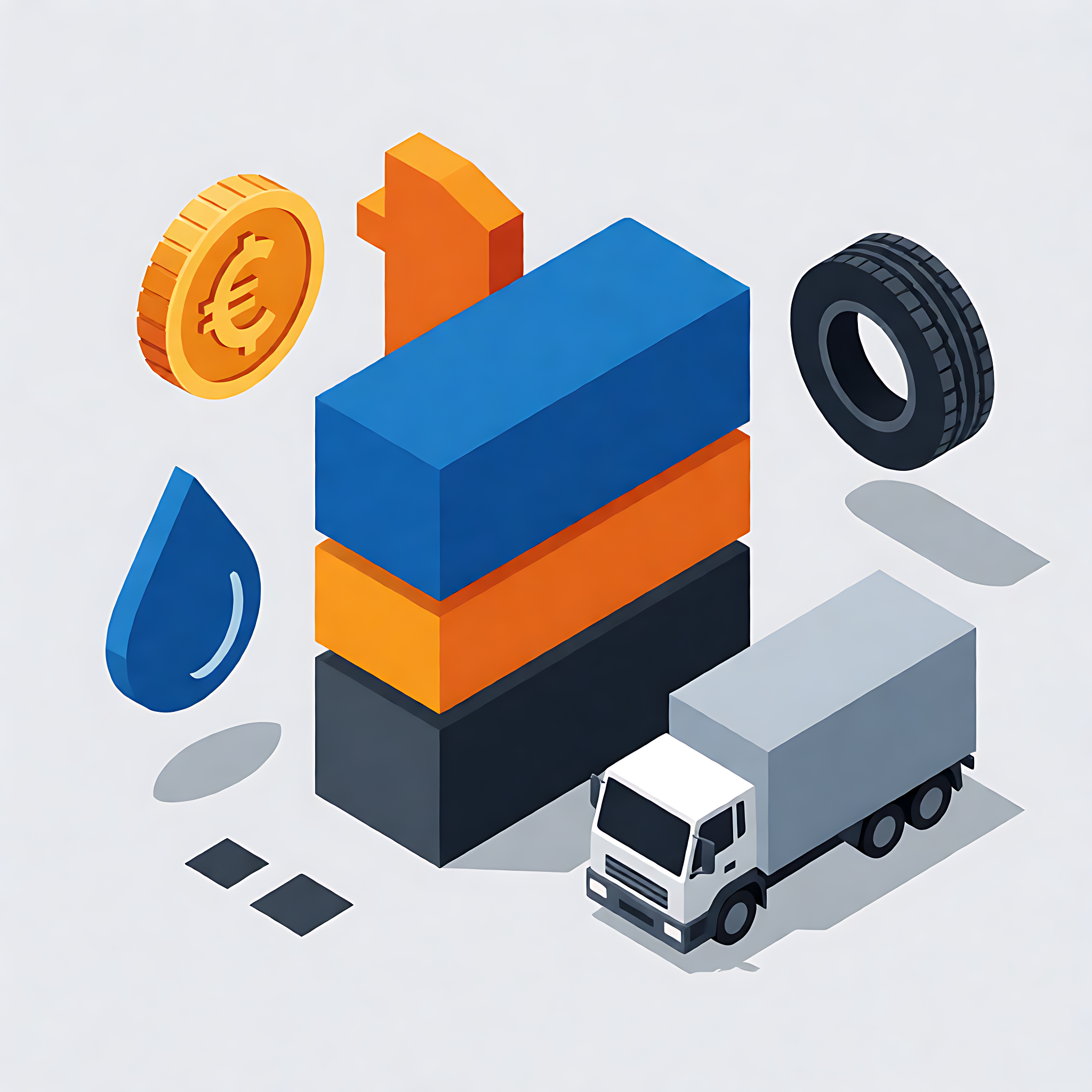
A rough rule of thumb: if more than 70% of your work is continuous operation in the same area, a crawler has the lower total cost of ownership; if you relocate more than 4-5 times a month, the trailer fees the wheeled machine saves will most likely cover its higher purchase premium.
4. Three More Details to Check When Buying
Tonnage matching: Don't blindly go bigger. Wheeled excavators commonly run 8-25 tonnes, and the bigger the machine the larger the turning radius, so it can't maneuver in tight urban sites; crawlers range from 1-tonne minis to 700-tonne mining machines — choose by volume of material.
Attachment compatibility: If you plan to run a breaker, ripper or hydraulic shear, pick a crawler first — its machine weight and stability handle heavy impact loads better.
Local service network: Whatever you choose, first check the density of the brand's service points and parts inventory in your province. However good the machine is, if it breaks and nobody repairs it for three days, the site stops and you eat the losses. In export markets, EquipNode likewise prioritizes matching customers with models that have a local service network.
Summary
Crawler and wheeled have no absolute better or worse — only more or less suitable. The core decision logic is: look at the terrain, look at relocation frequency, look at total cost of ownership. Pick tracks for big field earthworks, pick wheels for urban odd jobs with frequent relocation, and once you have thought these three through you won't buy the wrong machine.
For specific model parameters and quotations, or if you would like us to recommend the right excavator for your working conditions, please contact our sales team — we provide selection advice free of charge.